
INSTALLATION & REMEDIATION

Ladder Fall Arrest Systems.

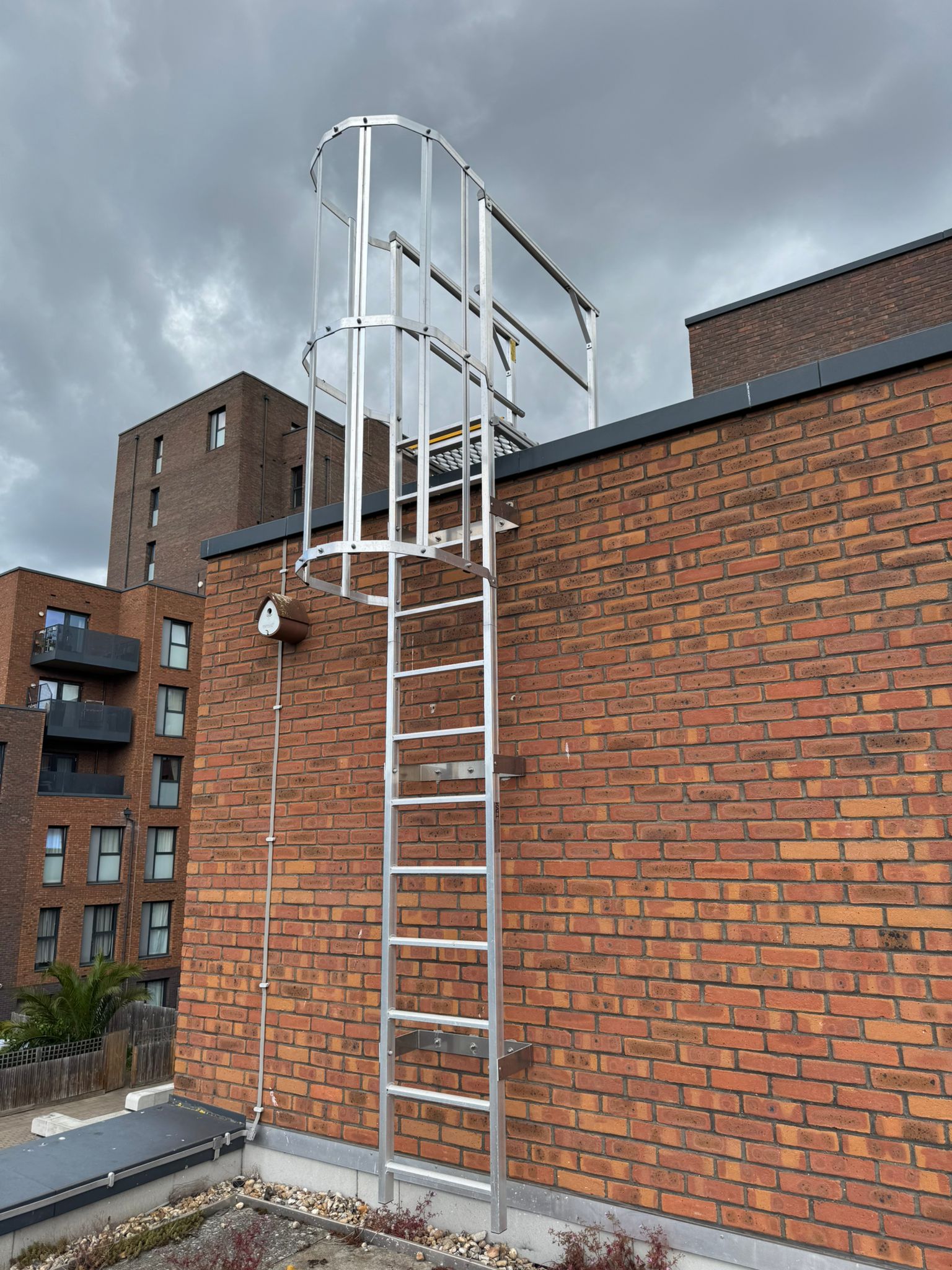
Vertical fall arrest systems for fixed ladders, replacing or supplementing safety cages on ladders over 6 metres in height.

STANDARD
BS EN 353-1, BS EN 353-2, BS EN 795
INSPECTION CYCLE
12 months (post-installation)
TURNAROUND
Site survey within 5 working days
CERTIFIED
ISO 9001 · 14001 · 45001
[SYSTEM ID: SHS-SVC-LADDER_FALL_ARREST / REV 01]
Ladder Fall Arrest Systems — Sky Height Safety engineers on site, working to BS EN 353-1, BS EN 353-2, BS EN 795

What it is

A ladder fall arrest system is a vertical anchor line installed alongside a fixed ladder, allowing the user to clip a sliding arrester to the line before they begin to climb. If the user slips, the arrester locks onto the line and arrests the fall before it develops. Modern systems use a rigid anchor line (BS EN 353-1) running the full height of the ladder, with a sliding arrester that the user attaches to their harness.

Current HSE guidance recommends fall arrest systems over safety cages for ladders over 6 metres in height. Cages were historically considered to provide fall protection, but in practice a fall inside a cage results in injury from impact against the cage itself, while still allowing the climber to fall the full height. Fall arrest systems address the actual fall, not the perception of containment.

Retrofit installations to existing ladders require an assessment of the ladder’s structural capacity to take the additional fixings. New installations are specified alongside the ladder design from the outset. The system can be installed to vertical or near-vertical ladders, and can be configured to allow continuous travel without the user needing to detach and reattach at intermediate points.

When it applies

  • On any new fixed ladder installation over 6 metres in height
  • As a retrofit to existing caged or uncaged ladders, particularly where cages are deteriorating
  • Following a compliance check that has identified ladder access as a residual risk
  • Where existing ladders need to be brought up to current standards as part of a wider compliance programme

The process

  1. Site survey. Existing ladder structure surveyed for retrofit suitability. New ladder access surveyed for new installation.
  2. Specification. System type, anchor line, intermediate guides, and arrester specified.
  3. Quotation. Fixed-price quotation covering design, supply, and installation.
  4. Installation. Carried out by our own engineers, with structural fixings to manufacturer specification.
  5. Certification and first inspection. Installation certificate plus the first 12-month inspection cycle established.

What you receive

  • Installation certificate to BS EN 353-1
  • Design drawings and structural fixing schedule
  • Manufacturer’s product warranty
  • Photographic record of installation
  • Inclusion in the next annual compliance check
  • User training on the system on request

Ladder Fall Arrest Systems — common questions.

Which British Standards does the installation comply with?

Every installation is engineered and certified to BS EN 353-1, BS EN 353-2, BS EN 795. The installation certificate references the applicable BS EN / BS standard for each system component, and the installation is entered into a 12 months (post-installation) recertification cycle from the day of handover.

Do you handle the design as well as the installation?

Yes. Every install starts with a site survey and a structural assessment of the building's mounting capacity. The system layout, anchor positions, and structural fixing schedule are designed by our engineers and verified against the relevant BS EN / BS standard before installation begins.

Is the install covered by an annual inspection regime after handover?

Yes — every install we complete is included in the next 12 months (post-installation) recertification cycle. The certificate, structural calculation pack, photographic record, and as-built drawings are filed against the asset and the next test is scheduled before our engineers leave site.

What does the deliverable pack look like?

Installation certificate referencing BS EN 353-1, BS EN 353-2, BS EN 795, as-built drawings, structural calculation pack, pull-test records for each anchor where applicable, photographic record of installation, and a written user method statement. Filed digitally and supplied as a single audit-ready PDF on the day of handover.

Can you take on remedial works following an inspection by another contractor?

Yes. We routinely take on remediation work where another contractor has inspected and flagged defects. We carry out our own pre-install survey to confirm the scope, quote fixed-price, and complete the works to current standards with full certification handover.

Find out where you stand. In ten minutes. At no cost.

Answer twelve questions about your building, your existing systems, and your last test dates. We send back a written compliance status report with the gaps prioritised by risk and a clear next step for each.

  • No site visit required to start
  • Written report within two working days
  • Risk-prioritised gap analysis
  • No obligation to proceed with any work
Start Compliance Check
SAMPLE OUTPUT COMPLIANCE REPORT
Guardrail system PASS
Mansafe cable line RECERTIFY
Eyebolts (12 points) FAIL
Roof access ladder PASS
Skylight protection MISSING

Tell us about your building.
We'll tell you where you stand.

For installation enquiries, inspection bookings, or compliance questions: send us a brief description of the site and the systems you have, or send your last test report. We respond within one working day, often the same day.

PHONE · LONDON
0204 572 5223
PHONE · HEAD OFFICE
07450 053021
RESPONSE TIME
Within 1 working day
By submitting, you agree to be contacted about your enquiry. We don't share your details. Read our privacy policy.