
What it is
Eyebolts are single-point structural anchors fitted to a building’s structure to provide a fall arrest, restraint, or work positioning attachment point. They are the most common single-point anchor on commercial buildings: typical applications include window cleaning anchors, facade restraint anchors, restraint anchors for plant access, and back-up anchors for harness-based maintenance. Where the requirement is specifically for abseil and rope-access descent anchors, see our abseiling anchor installation service.
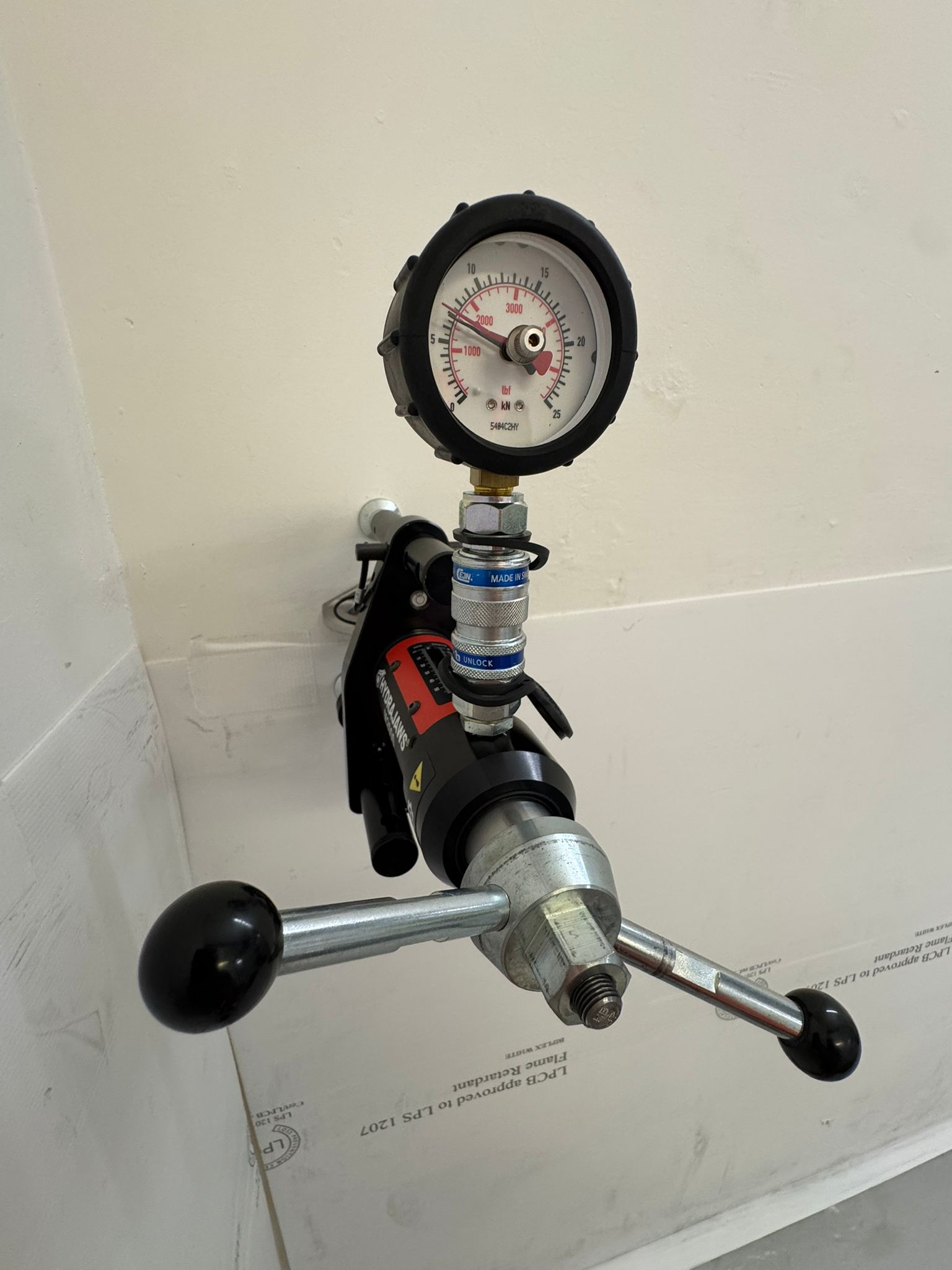
Each eyebolt is designed and installed to BS EN 795 Type A for the anchor device performance and BS 7883:2019 for the installation and inspection regime. Resin-bonded or mechanical fixings are selected against the parent material — concrete, brickwork, steelwork, or timber — with the structural capacity verified before drilling. Every eyebolt is pull-tested on installation to the standard’s minimum and to the manufacturer’s specification.
Installation includes the structural anchor itself, the eyebolt head, identification stamping, inclusion in the building’s anchor register, and the first certification cycle. We deliver the documentation pack required to bring the anchors into a recurring annual inspection programme from day one.
When it applies
- New build or refurbishment where window cleaning, facade access, or restraint anchors are anticipated
- Following an inspection where existing eyebolts have been condemned and require replacement
- Where unauthorised or undocumented anchors are present and the building owner needs a compliant equivalent
- For roof plant areas where individual restraint anchors are the right choice instead of a safety line
The process
- Site survey. Engineer attends, identifies required anchor positions, parent material, and structural capacity.
- Anchor specification. Type, fixing method, head specification, and identification scheme defined.
- Quotation. Fixed-price covering design, supply, installation, and commissioning pull tests.
- Installation. Carried out by our own engineers, with each anchor stamped, pull-tested, and added to the anchor register on completion.
- Certification. Installation certificates and pull-test records issued.
What you receive
- Installation certificate to BS EN 795 Type A and BS 7883:2019
- Pull-test record for every anchor on installation
- Anchor register with location, type, and identification reference
- Photographic record of installation
- Stamped identification on every anchor head
- 12-month recertification reminder