
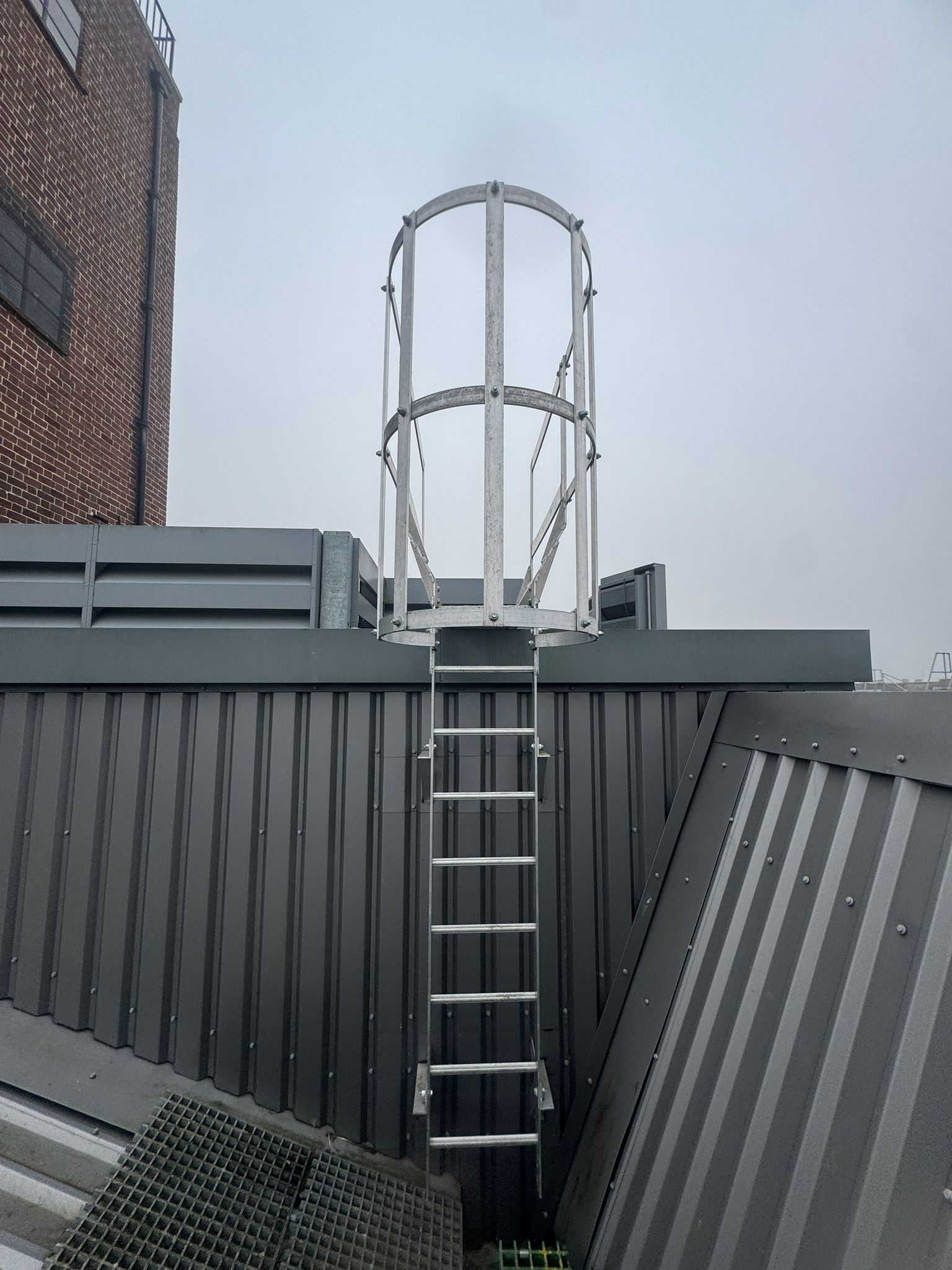
What it is
A fixed access ladder is part of the building infrastructure, and like every other means of access at height it must be kept in a safe condition and inspected at regular intervals by a competent person. A fixed access ladder inspection is a documented examination of the ladder, its fall protection, and its structural fixings, carried out against the standard the ladder was built to — BS 4211 for fixed ladders to buildings, BS EN ISO 14122-4 for industrial machinery access, or BS 5395-1 for inclined ship ladders and companionway stairs.
The inspection covers every part of the system that matters for safe use:
The ladder structure — rungs, stringers, treads, and welds are inspected for corrosion, cracking, distortion, wear, and loose or missing fixings. On inclined ship ladders the tread fixings and slip-resistant nosings are checked for security and wear.
The fall protection — on a caged ladder the hoops, longitudinal bars, and cage-to-stringer connections are checked against the relevant standard for spacing, security, and corrosion. On a fall-arrest-equipped ladder the rail or cable system, glider, and end terminations are inspected to BS EN 353-1, including the manufacturer’s wear limits.
The transitions and fixings — the top landing, hatch or step-through arrangement, handrails, the bottom anti-climb where fitted, and every structural fixing into the wall, facade, or supporting steel are inspected for integrity.
Because a fixed access ladder is often the only route to plant, parapets, or roof areas, a defect that takes it out of service can stop essential maintenance. Annual inspection catches deterioration early — corrosion at fixings, a failing cage hoop, a worn fall-arrest glider — before it becomes a reason to condemn the ladder.
When it applies
- Annual inspection of every fixed access ladder, caged ladder, fall-arrest ladder, and ship ladder on site
- Before first use of a newly acquired building where the ladder’s history is unknown
- After any incident, impact, or reported defect
- After structural works affecting the ladder’s mounting wall, facade, or supporting steel
- On acquisition or change of building ownership
- Where existing ladders have no current inspection record
The process
- Schedule and scope. Every fixed ladder, cage, fall-arrest rail, and ship ladder on site logged and located.
- Visual and structural inspection. Rungs, stringers, treads, welds, cages, fall-arrest systems, transitions, and fixings inspected against the relevant standard.
- Fall-arrest system check. Where fitted, the rail or cable, glider, and terminations checked to BS EN 353-1 and the manufacturer’s wear limits.
- Report. Each ladder segmented into pass, remediate, or fail, with photographs and defect notes.
- Remediation quote. Where defects are found, a fixed-price quotation for repair, re-cage, or replacement.
What you receive
- Inspection report covering every fixed access ladder on site, with a clear pass / remediate / fail status for each
- Photographic record of each ladder and any defects
- Defect register with recommended remediation and priority
- Certification against BS 4211, BS EN ISO 14122-4, or BS 5395-1 as applicable
- 12-month re-inspection reminder