
The brief
The University of Worcester appointed Sky Height Safety to carry out the inspection and testing of work at height systems across 18 sites within their estate portfolio. The project was focused on improving compliance, standardising inspection schedules across all locations, and creating a clear and accurate record of all roof access and fall protection equipment on site.
Before the programme started, inspection records were inconsistent between sites, certification dates were misaligned across the estate, and the estate team did not have a single consolidated view of which systems were installed where. This is a common challenge for large education estates that have grown through acquisition or phased development: systems installed at different times, by different contractors, to different standards — with no single point of oversight across the portfolio.
Under Regulation 5 of the Work at Height Regulations 2005, work at height equipment must be inspected at suitable intervals by a competent person to ensure it remains fit for purpose. Where systems have not been regularly inspected, or where documentation is incomplete, the duty holder faces both legal risk and the practical risk of operatives using uncertified or degraded equipment without knowledge of its condition.
What we did
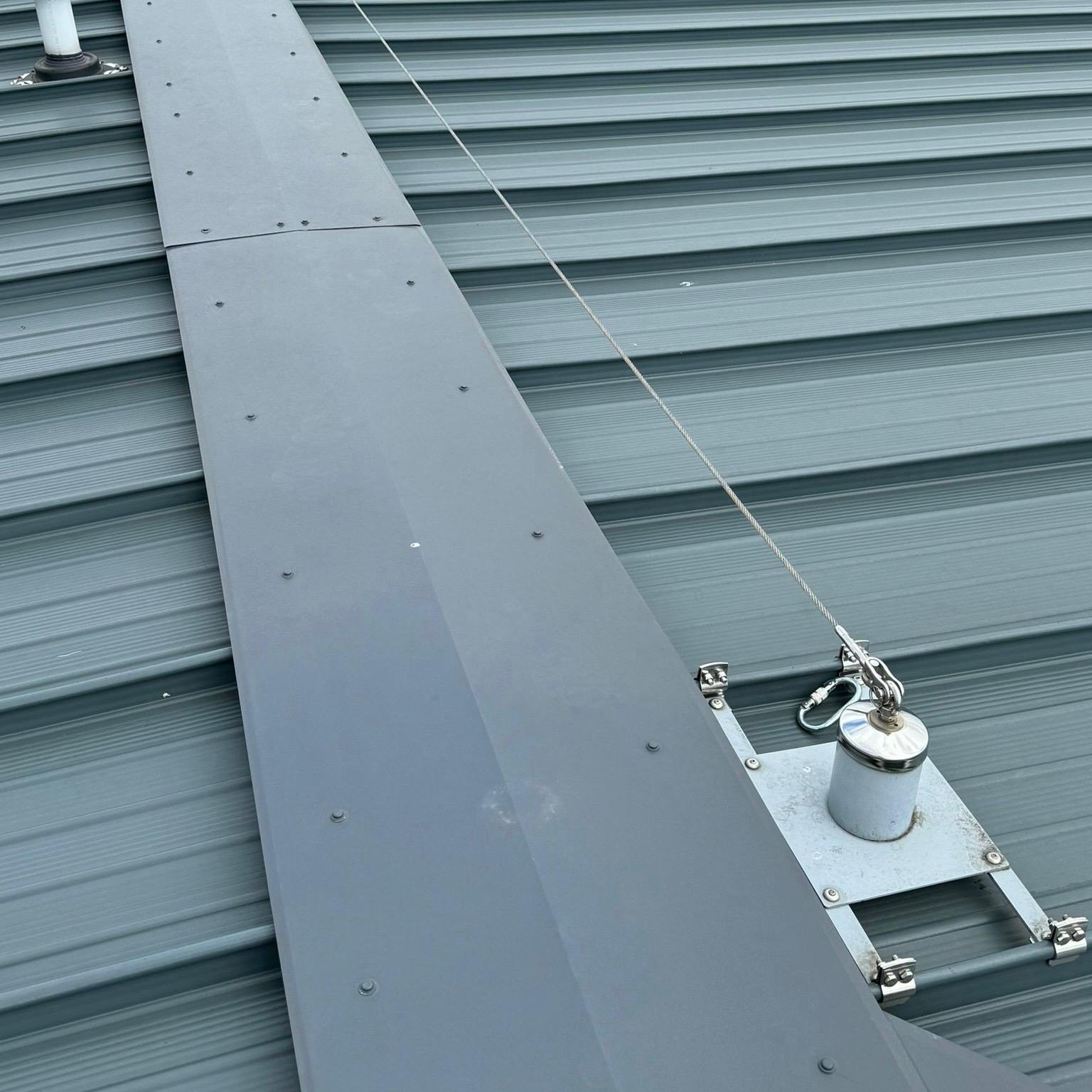
We completed detailed inspections across all 18 sites — covering eyebolts, abseil anchor points, fixed access ladders, guardrail systems, and horizontal safety lines — and produced a fully updated asset register giving the client a complete database of their work at height systems and equipment across the entire estate. Each entry records system type, location, installation standard, current condition, certification status, and the date of next required inspection.
Each system was inspected and tested to its relevant standard: eyebolts and anchor points to BS 7883:2019, guardrail systems to BS EN 13374:2013, fixed access ladders to BS 4211:2005+A1:2008, and horizontal safety lines to BS EN 795:2012. Where systems did not meet current standards or showed evidence of deterioration, they were either remediated immediately or formally quarantined pending further works, with written notification issued to the estate team.
Following the inspections, Sky Height Safety carried out a series of remedial works to bring systems up to current standards. This included the installation of fixed ladder stringers to improve ladder safety and regulatory compliance, alongside the remediation and installation of anchor points across multiple buildings. For each site, a full inspection report and certification schedule was issued, giving the estate team a complete and auditable record of all work carried out.
All inspection dates were then aligned across the estate so that the rolling programme of annual reinspections can be managed efficiently from a single schedule — eliminating the fragmented certification calendar that had previously made oversight difficult.
The outcome
By aligning inspection dates and improving system consistency across the estate, the university now benefits from a more streamlined compliance process, safer roof access, and a centralised overview of all work at height assets across their portfolio. The consolidated asset register means the estate management team can plan inspection visits efficiently, budget accurately for remedial works each year, and demonstrate compliance to insurers and the HSE if required.
The University of Worcester remain a current client — we continue to act on their behalf, maintaining the asset register as a live document and delivering the rolling inspection and remediation programme across all 18 sites.