
Book Your Testing, Installation and Recertification Today!
Professional companionway ladder installation services designed to provide safe, compliant access across commercial and industrial sites.
Companionway ladders, also known as ship ladders, provide fixed and stable access where space constraints make traditional staircases impractical. Commonly installed in commercial buildings, they are widely used to access roof hatches, plant areas, loft spaces and service zones.
Their inclined design offers greater stability than vertical ladders, making them safer for regular use and for personnel carrying tools or equipment as part of routine maintenance or inspection work.
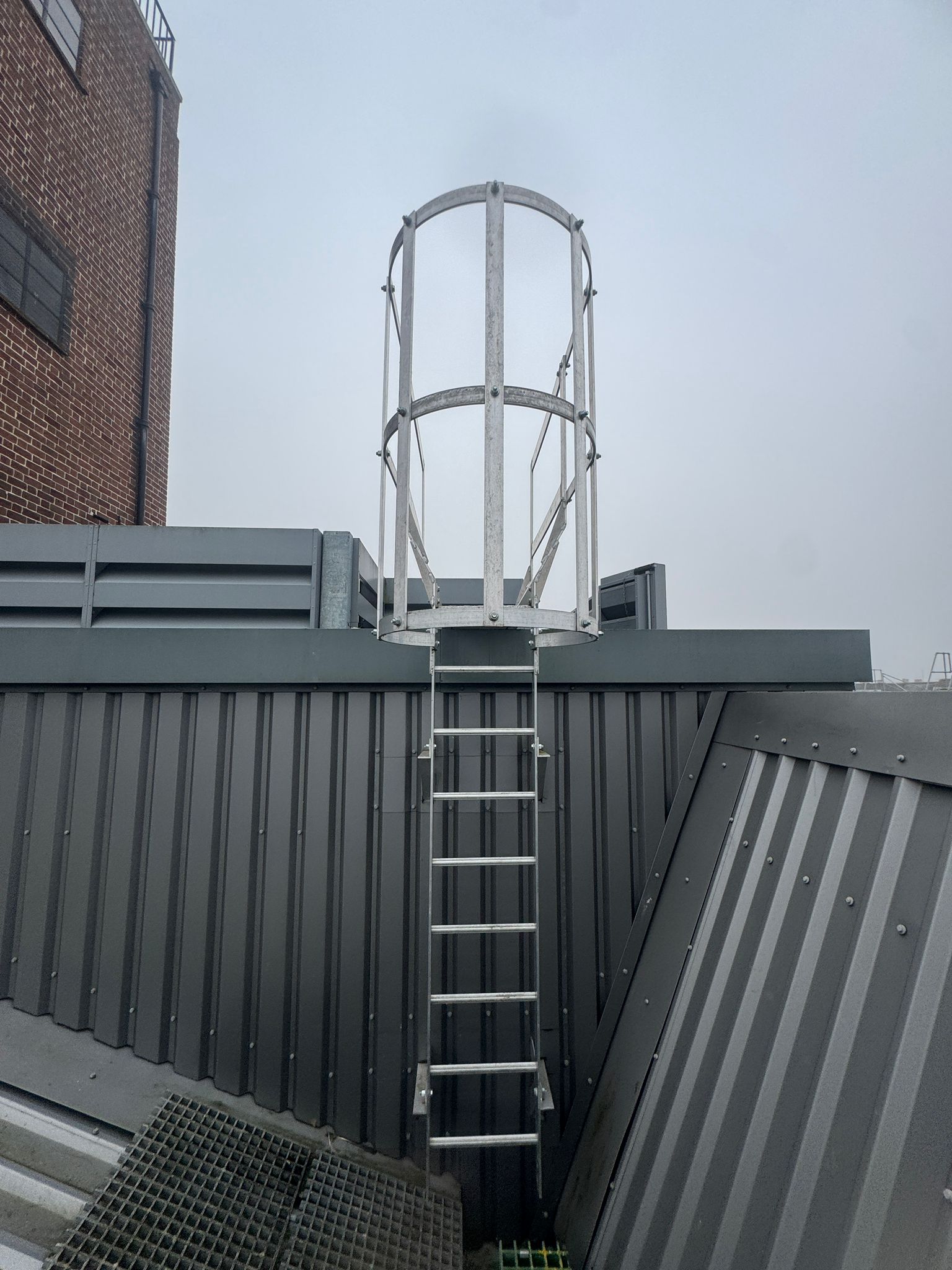
Companionway Ladder Installation Services
Correct installation is essential to ensure a companionway ladder remains safe, secure and compliant throughout its service life.
We specialise in the installation of companionway ladders across commercial and industrial environments, working in line with site requirements and relevant UK safety standards. Our team installs ladders in both internal and external locations, ensuring each system is securely fixed, correctly aligned and safe to use.
Where access heights exceed 3 metres, installations are completed with appropriate landing or rest platforms in line with regulatory requirements.
Compliance With UK Safety Standards
Companionway ladders used as a permanent means of access must comply with UK health and safety legislation and applicable British Standards.
All installations are carried out to support compliance with:
- BS 4211:2005 – Specification for permanently fixed ladders
- BS EN ISO 14122-4:2016 – Permanent means of access to machinery
In addition, companionway ladders and associated access systems used for work at height must be inspected at least every 12 months to ensure continued safety and compliance.
Why Companionway Ladders Are Used in Commercial Buildings?
Companionway ladders are often specified where access is required to heights under 3 metres and where space constraints prevent the use of stairs. Their angled design provides a safer and more practical alternative to vertical ladders in working environments.
Key benefits include:
- Increased stability through inclined access and handrails
- Anti-slip treads to reduce the risk of slips and falls
- Options for freestanding or permanently fixed installations
- Compatibility with guardrail and edge protection systems
- Quick installation with minimal disruption to site operations
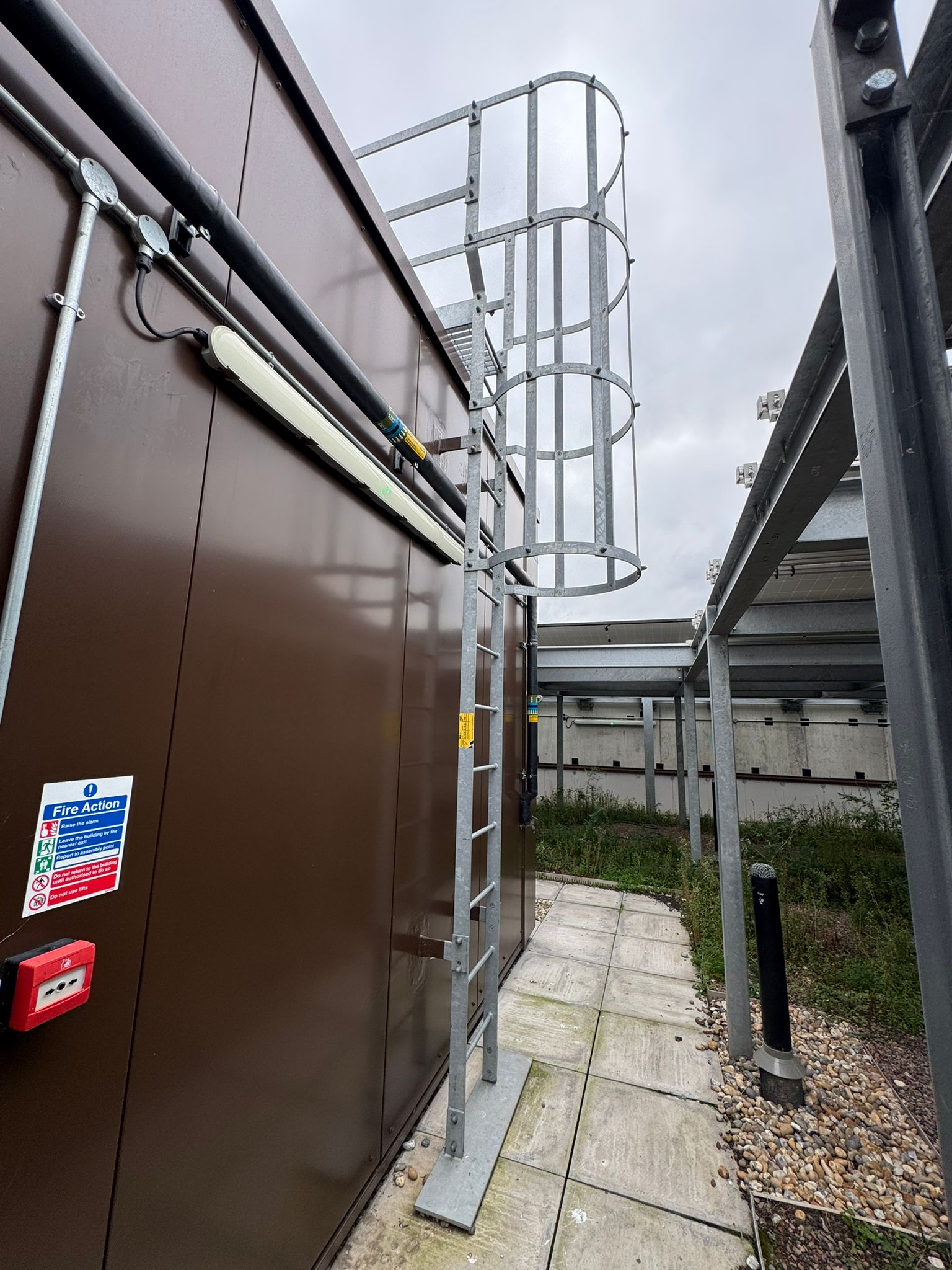
Inspection, Maintenance & Ongoing Safety
Companionway ladders form part of a building’s permanent access and work-at-height provision. Regular inspection and maintenance are essential to identify risks early and prevent accidents.
Inspections typically include checks for secure fixings, signs of damage or corrosion, worn or damaged treads, and the condition of handrails, platforms and guardrails. Both visual and physical checks are carried out to ensure the ladder remains safe to use.
Maintaining up-to-date inspection records also supports health and safety audits and demonstrates compliance with UK regulations.
Following successful inspection, we issue a Certificate of Compliance, detailing findings and confirming conformity with the relevant regulations.
Frequently Asked Questions
What is a companionway ladder?
A companionway ladder is a fixed, inclined ladder designed to provide safe access between levels where space is limited. They are commonly used in commercial buildings for roof access, plant rooms and service areas.
Why choose a companionway ladder instead of a vertical ladder?
Companionway ladders provide greater stability and control due to their angled design and handrails. This makes them safer for frequent use and for situations where users need to carry equipment.
Do companionway ladders need to comply with UK regulations?
Yes. Companionway ladders must comply with relevant UK health and safety legislation and British Standards, including BS 4211 and BS EN ISO 14122, depending on their application.
How often should companionway ladders be inspected?
Companionway ladders used for work at height should be inspected at least every 12 months. In high-use or harsh environments, more frequent inspections may be required.
Where are companionway ladders typically installed?
They are commonly installed in commercial and industrial buildings to access roof hatches, loft spaces, plant areas and other non-public service zones.
Who is responsible for companionway ladder safety?
Responsibility typically sits with the building owner, duty holder or facilities manager, who must ensure access systems are safe, compliant and properly maintained.