
Book Your Testing, Installation and Recertification Today!
Skylights and rooflights are one of the most underestimated risks on commercial roofs. They look solid. They sit within an otherwise strong roof system. And yet many will not safely support the weight of a person.
That is why skylight fall protection installation is not just a regulatory consideration. It is a practical safety requirement for buildings where contractors access plant, gutters, solar panels or roof systems.
HSE guidance consistently highlights fragile roof surfaces, including rooflights, as a common cause of serious falls, particularly because they are often difficult to see or mistaken for load-bearing areas.
At Sky Height Safety, we install, test, certify and maintain commercial skylight fall protection systems across the UK, ensuring they are compliant, correctly implemented and fully documented.
Book a consultation and we will review your roof layout, usage patterns and risk profile before recommending the most appropriate compliant solution.
Do Skylights Need Fall Protection?
In most commercial environments, the honest answer is simple.
If people can access the roof, skylights must be considered within the risk assessment.
The Work at Height framework is clear. Where fragile surfaces cannot be avoided, they must be controlled using suitable protective measures.
What often surprises building managers is that rooflights:
- Degrade over time due to UV exposure and weathering
- Can be painted over or difficult to distinguish from surrounding roof sheets
- Often sit directly on natural access routes to plant equipment
Treating the roof as generally safe without addressing rooflights specifically is one of the most common compliance gaps we identify during site assessments.
What Is Skylight Fall Protection?
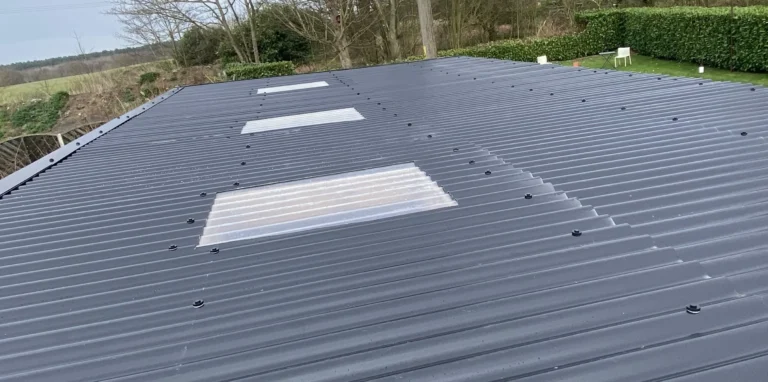
Skylight fall protection refers to safety systems installed to prevent people from falling through fragile rooflights or skylight openings on accessible roofs.
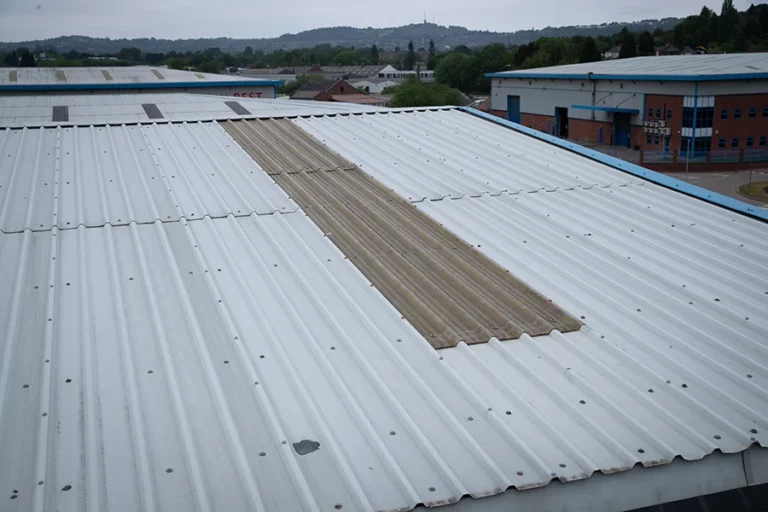
Many commercial rooflights are not designed to support the weight of a person. Over time, exposure to sunlight, weathering and ageing materials can weaken skylights further, increasing the risk of a fall-through incident.
Skylight protection systems act as a physical safeguard by either:
- Preventing access to fragile rooflight areas
- Reinforcing the skylight opening with protective covers
- Creating controlled routes around rooflights using guardrails or walkways
These systems are commonly installed on commercial and industrial buildings where contractors regularly access the roof for maintenance, inspection or plant servicing.
Can Skylight Protection Be Installed on Existing Roofs?
Yes. Most commercial skylight protection systems are designed specifically for retrofit installation on existing buildings.
In many cases protection can be installed:
- Without removing the existing skylight
- Without disrupting roof waterproofing
- With minimal impact to building operations
The appropriate installation method depends on several factors, including:
- Roof construction type
- Skylight shape and dimensions
- Condition of surrounding roof sheets
- Existing fall protection systems already installed
During the survey stage we assess these conditions to ensure the installation method is both safe and compatible with the roof structure.
Commercial Skylight Fall Protection Options
Every roof is different. The right approach depends on how many rooflights exist and what other hazards are present.
Following assessment, we recommend and install the most appropriate compliant solution for your roof layout and access requirements.
Permanent Rooflight Covers
For buildings with recurring access such as HVAC servicing or reactive maintenance, permanent collective protection provides passive safety. Once installed, protection is always in place regardless of who accesses the roof.
These systems are typically preferred because they:
- Do not rely on behavioural compliance
- Provide ongoing protection for all future contractors
- Reduce liability risk for building owners
Guardrails and Zoned Access Routes
Where rooflights sit along regular walk paths, covers alone may not be sufficient.
In these cases, we implement controlled routes using guardrails, walkway demarcation and zoning to reduce the likelihood of personnel entering hazardous areas.
If guardrail systems are already installed on your roof, they should be regularly inspected and certified. Our Guardrail Compliance Testing and Certification service supports this process.
Integrated Fall Arrest or Restraint Systems
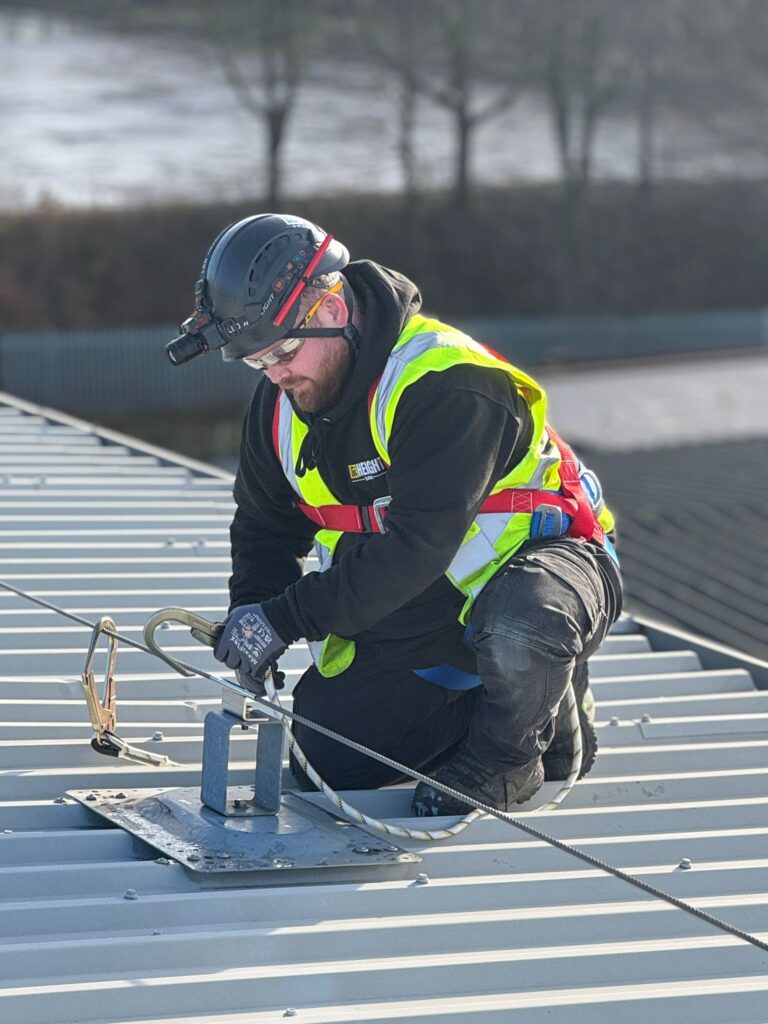
On more complex roofs, particularly where multiple hazards are present, skylight protection often forms part of a wider fall protection strategy. This may include anchor points, horizontal lifeline systems, or designated access routes designed to control how contractors move around the roof.
Where lifeline systems are already installed, it is essential that they remain properly inspected and certified. Our Safety Line Compliance Testing service ensures existing systems are regularly assessed, documented, and maintained in line with safety requirements.
If your building already has multiple safety systems installed, our fall protection equipment testing and certification services provide a structured way to ensure all equipment across the roof remains compliant, properly recorded, and ready for inspection or audit.
What Is the Average Lifespan of a Skylight?
Lifespan varies depending on material and exposure. From a safety standpoint, ageing rooflights should never be assumed load bearing.
UV exposure, environmental conditions and previous repairs can all reduce structural integrity over time. This is why roofs are typically treated as fragile unless formally assessed otherwise by a competent person.
Planning protection based on appearance alone is not a defensible position.
Why Choose Sky Height Safety?
- 20+ years of technical and engineering experience
- Nationwide mobile man anchor testing services
- Expertise across multiple height safety systems
- Clear, audit-ready reports with no ambiguity
- Honest advice — no unnecessary replacements or upselling
- Practical guidance you can act on immediately
Clients trust us because we combine compliance knowledge with real-world understanding of how systems are used on site.
Frequently Asked Questions
Are skylight guards legally required?
UK regulations do not mandate a specific product, but the Work at Height Regulations require duty holders to control risks from fragile surfaces. If skylights are present on an accessible roof, protective measures are normally required to prevent falls.
Do all rooflights need protection?
If a roof can be accessed for maintenance or inspection, rooflights are typically treated as fragile surfaces unless proven otherwise by a competent assessment. Older rooflights in particular should never be assumed safe to walk on.
Can skylight covers be installed without damaging the roof?
Yes, many skylight protection systems can be installed without penetrating the roof membrane. The exact installation method depends on the roof construction and the type of protection system used.
What happens if skylights are left unprotected?
Unprotected rooflights are a major cause of falls from height on commercial roofs. Accidents often occur during routine tasks such as maintenance, inspections, or gutter cleaning.
Can skylight protection be installed without disrupting operations?
In most cases, yes. Installation can usually be planned to minimise disruption, and many systems can be installed quickly following a roof survey and design assessment.