
Understanding the difference between fall arrest and fall restraint is essential for anyone responsible for managing buildings, rooftops, or work-at-height activities. While the terms are often used interchangeably, they represent two very different safety approaches, and choosing the wrong one can lead to compliance failures, unsafe working conditions, or costly system upgrades later.
This guide explains the difference between fall arrest and fall restraint systems in clear, practical terms, with real-world insight from inspections and testing across commercial buildings in the UK.

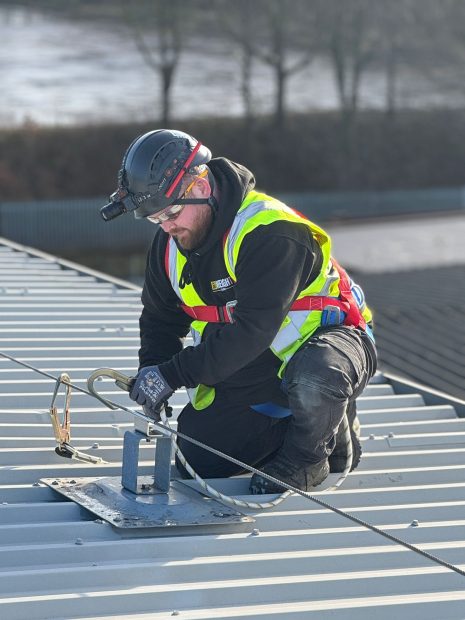
Understanding the Difference Between Fall Arrest and Fall Restraint
At a simple level:
- Fall restraint systems are designed to prevent a fall from occurring
- Fall arrest systems are designed to stop a fall after it has started
The distinction matters because each system:
- Carries different risks
- Places different loads on anchor points
- Has different rescue implications
In practice, the difference between fall restraint and fall arrest often becomes clear only when systems are inspected and that’s where many sites discover problems they didn’t know they had.
What Is a Fall Restraint System?
A fall restraint system physically prevents a worker from reaching a fall hazard, such as a roof edge or fragile surface.
How Fall Restraint Works in Practice
Fall restraint limits movement so the user cannot physically get into a position where a fall is possible. This is usually achieved by controlling lanyard length or using fixed travel paths.
Common commercial examples include:
- Roof-edge restraint systems on flat roofs
- Restraint lines for plant maintenance areas
- Walkway-linked restraint points guiding safe access routes
Advantages and Limitations of Fall Restraint
Advantages
- No fall occurs, so risk is significantly reduced
- Lower loads on anchor points
- No rescue plan required in most cases
Limitations
- Requires accurate design and positioning
- Incorrect lanyard lengths can unintentionally allow a fall
- Less suitable for complex or irregular roof layouts
In theory, fall restraint is the preferred option, but in reality, many restraint systems fail because they are poorly designed or incorrectly used.
What Is a Fall Arrest System?
A fall arrest system allows the user to reach the fall hazard, but safely stops them if they fall.
How Fall Arrest Systems Function
Fall arrest systems work by:
- Allowing free movement near edges
- Arresting the fall using energy-absorbing components
- Limiting forces transmitted to the user and anchor point
Typical components include:
- Full body harness
- Energy-absorbing lanyard or inertia reel
- Anchor points rated for arrest loads
Risks and Responsibilities With Fall Arrest
Fall arrest systems come with additional responsibilities:
- Rescue planning is mandatory
- Greater forces are applied to anchors and structures
- Clearance below the working area must be sufficient
Fall arrest should only be used where fall restraint is not reasonably practicable.
When Must a Person Use a Fall Arrest or Fall Restraint System?
| Aspect | Fall Restraint | Fall Arrest |
|---|---|---|
| Prevents a fall? | Yes | No |
| Allows access to edge? | No | Yes |
| Fall occurs? | No | Yes (controlled) |
| Rescue plan required? | Usually no | Always |
| Anchor loading | Lower | Significantly higher |
| System complexity | Lower | Higher |
This comparison highlights why the difference between fall arrest and fall restraint systems has serious implications for safety and compliance.
When Must a Person Use a Fall Arrest or Fall Restraint System?
UK work-at-height principles follow a clear hierarchy:
- Avoid work at height where possible
- Prevent falls where work at height cannot be avoided
- Mitigate the consequences of a fall where prevention is not possible
This hierarchy is clearly set out in guidance from the Health and Safety Executive (HSE), which outlines employer and duty-holder responsibilities for managing fall risks when working at height:
In practical terms:
- Fall restraint should be used wherever it is reasonably practicable
- Fall arrest is used only when restraint cannot be achieved
During inspections, it’s common to find systems labelled as “restraint” that actually allow a fall — unintentionally turning them into fall arrest systems without the necessary rescue or anchor design considerations.
Can You Use a Fall Arrest Lanyard for Restraint?
This is a common question and a common mistake.
Technically, some fall arrest equipment can be configured for restraint, but only if:
- The lanyard length physically prevents reaching the fall hazard
- Anchor positioning has been properly assessed
- The system is clearly identified and documented as restraint
In practice, many sites assume they are using restraint, but inspections reveal the user could still fall creating a hidden compliance and safety risk.
Expert Insight From Real Inspections
During anchor system inspections, one of the most frequent issues we find is misclassification. Systems installed as “restraint” allow enough movement for a fall, while anchors have not been designed or tested for arrest loads.
These issues rarely come from neglect, they come from misunderstanding the real difference between fall arrest and fall restraint at the design stage.
This is why professional assessment and ongoing testing are critical.
How System Choice Affects Testing, Certification, and Compliance
Your choice between fall arrest and fall restraint directly affects how systems must be managed over time.
For example:
- Horizontal systems must undergo regular safety line testing
- Access routes often rely on compliant roof walkways testing
Even a well-installed system can become non-compliant if it is not tested, documented, and re-certified correctly.
Why Building Owners Trust Sky Height Safety
At Sky Height Safety, we specialise in inspection, testing, certification, installation, and maintenance of working-at-height systems across the UK.
Our team brings:
- Over 20 years of hands-on height safety and engineering experience
- Practical insight gained from real inspections — not just specifications
- Clear documentation that supports audits and compliance management
- Straightforward advice that reduces confusion and risk
We regularly help clients identify hidden issues before incidents occur and ensure systems are genuinely fit for purpose.
Unsure Which System You Need? Speak to an Expert
If you’re unsure about the difference between fall restraint and fall arrest on your site or whether your existing systems are doing what you think they are, expert advice early can prevent serious issues later.
Book a consultation with Sky Height Safety to review your systems, clarify your responsibilities, and ensure your building remains safe, compliant, and ready for use.